Unveiling the Hidden Value of Ecosystem Services in Wadi Landscapes: A Case Study in Riyadh, Saudi Arabia
DOI:
https://doi.org/10.3097/LO.2026.1147Keywords:
Wadi Hanifah, planning support, arid landscapes, expert-based assessment, habitat mappingAbstract
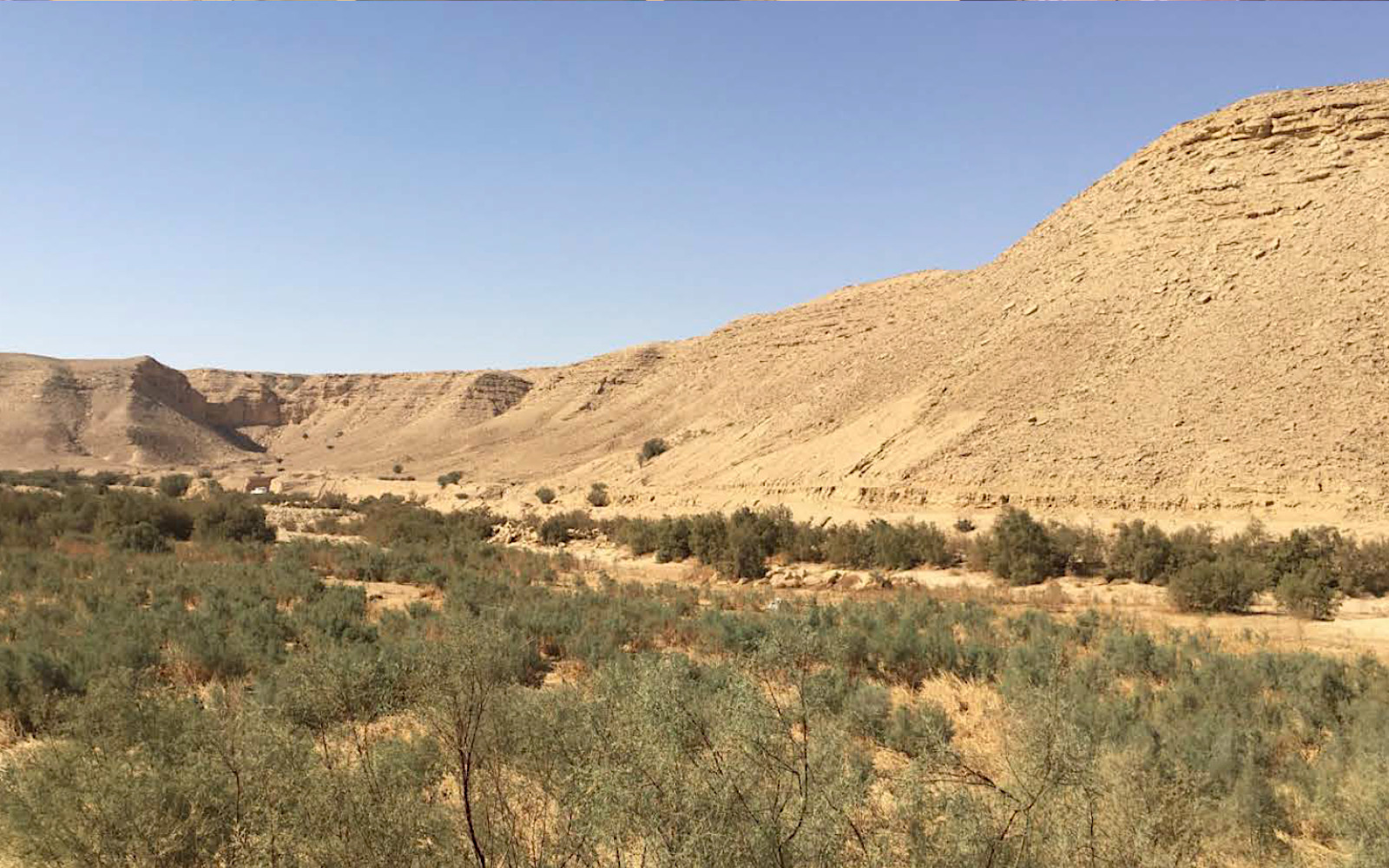
Wadis, dry rivers common in arid regions, deliver diverse ecosystem services (ES) despite their short-lived water flow. This study aims to en-hance scientific understanding of relevant habitat types, the ES they provide, and their perceived significance to local people. It applies an adapted matrix method to assess habitat-level ES provision in Wadi Han-ifah, Riyadh, Saudi Arabia. A panel of ten experts—landscape planners, engineers, and decision-makers—identified key habitat types using field surveys, satellite imagery, and planning document review. Experts then evaluated each habitat’s capacity to provide four ES: habitat provision for flora and fauna, recreation and mental/physical health benefits, local climate regulation, and flood mitigation. Results reveal clear differenc-es in ES provision across habitats, with natural gravel plains with Aca-cia trees and bushland receiving the highest overall scores, while more disturbed habitats score lower. The findings demonstrate the value of integrating expert knowledge into spatial planning and provide a repli-cable framework for ES assessment in under-researched wadi systems. This approach supports more sustainable landscape management and policy-making in rapidly urbanizing arid environments.
References
Abdel Khalik, K., Al-Gohary, I., & Al-Sodany, Y. (2017). Floristic composition and vegetation: Environmental relationships of Wadi Fatimah, Mecca, Saudi Arabia. Arid Land Research and Management, 31(3), 316–334. https://doi.org/10.1080/15324982.2017.1318188
Abdelkarim, A., & Gaber, A. F. D. (2019). Flood risk assessment of the Wadi Nu’man Basin, Mecca, Saudi Arabia (during the period 1988–2019) based on the integration of geomatics and hydraulic modeling: A case study. Water, 11(9), 1887. https://doi.org/10.3390/w11091887
Abdel Khalik, K., Al-Gohary, I., & Al-Sodany, Y. (2017). Floristic composition and vegetation: Environmental relationships of Wadi Fatimah, Mecca, Saudi Arabia. Arid Land Research and Management, 31(3), 316–334. https://doi.org/10.1080/15324982.2017.1318188 DOI: https://doi.org/10.1080/15324982.2017.1318188
Abdelkarim, A., & Gaber, A. F. D. (2019). Flood risk assessment of the Wadi Nu’man Basin, Mecca, Saudi Arabia (during the period 1988–2019) based on the integration of geomatics and hydraulic modeling: A case study. Water, 11(9), 1887. https://doi.org/10.3390/w11091887 DOI: https://doi.org/10.3390/w11091887
Adem Esmail, B., Cortinovis, C., Geneletti, D., Inostroza, L., Peters, R., Romelli, C., Schulze, I., Tecle-Misghina, B., Teklemariam, M., Wang, J., & Albert, C. (2025a). Mapping and analyzing ecosystem services hotspots and coldspots for sustainable spatial planning in the Greater Asmara area, Eritrea. Environmental Management, 75(3), 551–567. https://doi.org/10.1007/s00267-024-02078-x DOI: https://doi.org/10.1007/s00267-024-02078-x
Alcamo, J., Bennett, E. M., & Millennium Ecosystem Assessment Program (Eds.). (2003). Ecosystems and human well-being: A framework for assessment. Island Press.
Alghamdi, A. S., Alzhrani, A. I., & Alanazi, H. H. (2021). Local climate zones and thermal characteristics in Riyadh City, Saudi Arabia. Remote Sensing, 13(22), 4526. https://doi.org/10.3390/rs13224526 DOI: https://doi.org/10.3390/rs13224526
Al-Hathloul, S. (2017). Riyadh development plans in the past fifty years (1967-2016). Current Urban Studies, 5(1), 97–120. https://doi.org/10.4236/cus.2017.51007 DOI: https://doi.org/10.4236/cus.2017.51007
Al-Hathloul, S., & Abdel Rahman, M. (2010). The national spatial strategy for Saudi Arabia. In Al Manakh 2: Gulf continued (Vol. 23, pp. 246–247). Stichting Archis. https://archis.org/publications/volume-23-al-manakh-gulf-continued/
Alhefnawi, M. A. M., Lawal Dano, U., Alshaikh, A. M., Abd Elghany, G., Almusallam, A. A., & Paraman, S. (2024). Population modeling and housing demand prediction for the Saudi 2030 Vision: A case study of Riyadh City. International Journal of Housing Markets and Analysis, 17(6), 1558–1572. https://doi.org/10.1108/IJHMA-05-2023-0062 DOI: https://doi.org/10.1108/IJHMA-05-2023-0062
Aljaddani, A. H., Song, X.-P., & Zhu, Z. (2022). Characterizing the patterns and trends of urban growth in Saudi Arabia’s 13 capital cities using a Landsat time series. Remote Sensing, 14(10), 2382. https://doi.org/10.3390/rs14102382 DOI: https://doi.org/10.3390/rs14102382
Alyemeni, M., Wijaya, L., & Hayat, S. (2014). Physico-chemical and heavy metal status of wastewater and sediment of Wadi Hanifah (Riyadh, Saudi Arabia): A case study. Fresenius Environmental Bulletin, 23, 130–137.
Aqel, H., Sannan, N., Al-Hunaiti, A., & Fodah, R. (2024). Integrated water quality dynamics in Wadi Hanifah: Physical, chemical, and biological perspectives. PLOS ONE, 19(2), e0298200. https://doi.org/10.1371/journal.pone.0298200 DOI: https://doi.org/10.1371/journal.pone.0298200
Burkhard, B., Kroll, F., Müller, F., & Windhorst, W. (2009). Landscapes’ capacities to provide ecosystem services - A concept for land-cover based assessments. Landscape Online, 15, 1–22. https://doi.org/10.3097/LO.200915 DOI: https://doi.org/10.3097/LO.200915
Campagne, C. S., & Roche, P. (2018). May the matrix be with you! Guidelines for the application of expert-based matrix approach for ecosystem services assessment and mapping. One Ecosystem, 3, e24134. https://doi.org/10.3897/oneeco.3.e24134 DOI: https://doi.org/10.3897/oneeco.3.e24134
Campagne, C. S., Roche, P., Gosselin, F., Tschanz, L., & Tatoni, T. (2017). Expert-based ecosystem services capacity matrices: Dealing with scoring variability. Ecological Indicators, 79, 63–72. https://doi.org/10.1016/j.ecolind.2017.03.043 DOI: https://doi.org/10.1016/j.ecolind.2017.03.043
Cardinale, B. J., Duffy, J. E., Gonzalez, A., Hooper, D. U., Perrings, C., Venail, P., Narwani, A., Mace, G. M., Tilman, D.,
Wardle, D. A., Kinzig, A. P., Daily, G. C., Loreau, M., Grace, J. B., Larigauderie, A., Srivastava, D. S., & Naeem, S. (2012). Biodiversity loss and its impact on humanity. Nature, 486(7401), 59–67. https://doi.org/10.1038/nature11148 DOI: https://doi.org/10.1038/nature11148
European Commission, Joint Research Centre. (2020). Mapping and assessment of ecosystems and their services: An EU wide ecosystem assessment in support of the EU biodiversity strategy. Publications Office. https://data.europa.eu/doi/10.2760/757183
Evans, J. R., & Mathur, A. (2005). The value of online surveys. Internet Research, 15(2), 195–219. https://doi.org/10.1108/10662240510590360 DOI: https://doi.org/10.1108/10662240510590360
Facey, W. (1992). Riyadh: The old city from its origins until the 1950s. IMMEL Publ.
Foley, J. A., DeFries, R., Asner, G. P., Barford, C., Bonan, G., Carpenter, S. R., Chapin, F. S., Coe, M. T., Daily, G. C., Gibbs, H. K., Helkowski, J. H., Holloway, T., Howard, E. A., Kucharik, C. J., Monfreda, C., Patz, J. A., Prentice, I. C., Ramankutty, N., & Snyder, P. K. (2005). Global consequences of land use. Science, 309(5734), 570–574. https://doi.org/10.1126/science.1111772 DOI: https://doi.org/10.1126/science.1111772
Garcia Rodrigues, J., Conides, A., Rivero Rodriguez, S., Raicevich, S., Pita, P., Kleisner, K., Pita, C., Lopes, P., Alonso Roldán, V., Ramos, S., Klaoudatos, D., Outeiro, L., Armstrong, C., Teneva, L., Stefanski, S., Böhnke-Henrichs, A., Kruse, M., Lillebø, A., Bennett, E., … Villasante, S. (2017). Marine and coastal cultural ecosystem services: Knowledge gaps and research priorities. One Ecosystem, 2, e12290. https://doi.org/10.3897/oneeco.2.e12290 DOI: https://doi.org/10.3897/oneeco.2.e12290
Ghazanfar, S. A. (2024). Biogeography and conservation in the Arabian Peninsula: A present perspective. Plants, 13(15), 2091. https://doi.org/10.3390/plants13152091 DOI: https://doi.org/10.3390/plants13152091
Imam, A. (2023). Examining the impact of Green Riyadh Project on alleviating urban heat island effects. Journal of Umm Al-Qura University for Engineering and Architecture, 14(4), 201–211. https://doi.org/10.1007/s43995-023-00030-4 DOI: https://doi.org/10.1007/s43995-023-00030-4
IPBES. (2018). The IPBES regional assessment report on biodiversity and ecosystem services for Asia and the Pacific. Zenodo. https://doi.org/10.5281/zenodo.3237373
Jacobs, S., Burkhard, B., Van Daele, T., Staes, J., & Schneiders, A. (2015). ‘The Matrix Reloaded’: A review of expert knowledge use for mapping ecosystem services. Ecological Modelling, 295, 21–30. https://doi.org/10.1016/j.ecolmodel.2014.08.024 DOI: https://doi.org/10.1016/j.ecolmodel.2014.08.024
Jacobs, S., Dendoncker, N., Martín-López, B., Barton, D. N., Gomez-Baggethun, E., Boeraeve, F., McGrath, F. L., Vierikko, K., Geneletti, D., Sevecke, K. J., Pipart, N., Primmer, E., Mederly, P., Schmidt, S., Aragão, A., Baral, H., Bark, R. H., Briceno, T., Brogna, D., … Washbourne, C.-L. (2016). A new valuation school: Integrating diverse values of nature in resource and land use decisions. Ecosystem Services, 22, 213–220. https://doi.org/10.1016/j.ecoser.2016.11.007 DOI: https://doi.org/10.1016/j.ecoser.2016.11.007
Jax, K., Barton, D. N., Chan, K. M. A., De Groot, R., Doyle, U., Eser, U., Görg, C., Gómez-Baggethun, E., Griewald, Y., Haber, W., Haines-Young, R., Heink, U., Jahn, T., Joosten, H., Kerschbaumer, L., Korn, H., Luck, G. W., Matzdorf, B., Muraca, B., … Wichmann, S. (2013). Ecosystem services and ethics. Ecological Economics, 93, 260–268. https://doi.org/10.1016/j.ecolecon.2013.06.008 DOI: https://doi.org/10.1016/j.ecolecon.2013.06.008
Kashmiri, S. (2023). Operationalizing sense of place concepts and cultural ecosystem services to explore urban ecosystem rehabilitation performance from a socio-cultural lens: The case of Wadi Hanifah—Riyadh, Saudi Arabia [Master Thesis, University of Waterloo]. http://hdl.handle.net/10012/19580
Landscape Architecture Foundation, Trottier, J., & Eidick, K. (2015). Wadi Hanifah comprehensive development plan. Landscape Architecture Foundation. https://doi.org/10.31353/cs1040 DOI: https://doi.org/10.31353/cs1040
Langemeyer, J., & Connolly, J. J. T. (2020). Weaving notions of justice into urban ecosystem services research and practice. Environmental Science & Policy, 109, 1–14. https://doi.org/10.1016/j.envsci.2020.03.021 DOI: https://doi.org/10.1016/j.envsci.2020.03.021
Longato, D., Cortinovis, C., Albert, C., & Geneletti, D. (2021). Practical applications of ecosystem services in spatial planning: Lessons learned from a systematic literature review. Environmental Science & Policy, 119, 72–84. https://doi.org/10.1016/j.envsci.2021.02.001 DOI: https://doi.org/10.1016/j.envsci.2021.02.001
Marozzi, J. (2021). The Arab conquests: The spread of Islam and the first Caliphates. Head of Zeus.
Masoud, M. H. Z., Basahi, J. M., & Rajmohan, N. (2018). Impact of flash flood recharge on groundwater quality and its suitability in the Wadi Baysh Basin, Western Saudi Arabia: An integrated approach. Environmental Earth Sciences, 77(10), 395. https://doi.org/10.1007/s12665-018-7578-0 DOI: https://doi.org/10.1007/s12665-018-7578-0
Motasim, H. (2018). [Re]covering Jeddah’s wadis: Building the city’s resilience through green infrastructure. Journal of Sustainable Development, 11(4), 228. https://doi.org/10.5539/jsd.v11n4p228 DOI: https://doi.org/10.5539/jsd.v11n4p228
Mucha, I., & Fara, M. (1984). Principles of water management in wadis [Technical Background Paper]. Irrigation Department. https://floodbased.org/wp-content/uploads/2021/05/Principles-of-water-management-in-wadis.pdf
O’Connor, T. G., Puttick, J. R., & Hoffman, M. T. (2014). Bush encroachment in southern Africa: Changes and causes. African Journal of Range & Forage Science, 31(2), 67–88. https://doi.org/10.2989/10220119.2014.939996 DOI: https://doi.org/10.2989/10220119.2014.939996
Osman, A. K. E., & Abdein, M. A. E.-H. (2019). Floristic diversity of Wadi Ar’ar, Saudi Arabia. Journal of Taibah University for Science, 13(1), 772–789. https://doi.org/10.1080/16583655.2019.1634177 DOI: https://doi.org/10.1080/16583655.2019.1634177
Ray, N. M., & Tabor, S. W. (2003). Smart marketers are overcoming the challenges of online research. Marketing Research, Spring 2003, 32–37.
Ruiz, N. N., Suárez Alonso, M. L., & Vidal-Abarca, M. R. (2021). Contributions of dry rivers to human well-being: A global review for future research. Ecosystem Services, 50, 101307. https://doi.org/10.1016/j.ecoser.2021.101307 DOI: https://doi.org/10.1016/j.ecoser.2021.101307
Sallam, A., Bader Alharbi, A., Usman, A. R. A., Hussain, Q., Ok, Y. S., Alshayaa, M., & Al-Wabel, M. (2018). Environmental consequences of dam construction: A case study from Saudi Arabia. Arabian Journal of Geosciences, 11(3), 47. https://doi.org/10.1007/s12517-018-3387-8 DOI: https://doi.org/10.1007/s12517-018-3387-8
Shackleton, C., Shackleton, S., Gambiza, J., Nel, E., Rowntree, K., & Urquhart, P. (2008). Links between Ecosystem Ser-vices and Poverty Alleviation: Situation analysis for arid and semi-arid lands in southern Africa. Consortium on Ecosystems and Poverty in Sub-Saharan Africa (CEPSA). Ecosystem Services and Poverty Reduction Research Pro-gramme: DFID, NERC, ESRC. https://science.uct.ac.za/sites/default/files/content_migration/science_uct_ac_za/841/files/Shackleton%2520et%2520al%2520%25202008%-2520Southern%2520African%2520Ecosystem%2520Servic-es%2520and%2520Poverty%2520report_CEPSA.pdf
Steward, A. L., Von Schiller, D., Tockner, K., Marshall, J. C., & Bunn, S. E. (2012). When the river runs dry: Human and ecological values of dry riverbeds. Frontiers in Ecology and the Environment, 10(4), 202–209. https://doi.org/10.1890/110136 DOI: https://doi.org/10.1890/110136
Tschangho J. K. (n.d.). Riyadh national capital, Saudi Arabia. In Encyclopedia Britannica. Retrieved February 19, 2026, from https://www.britannica.com/place/Riyadh
Vidal-Abarca Gutiérrez, M. R., Nicolás-Ruiz, N., Sánchez-Montoya, M. D. M., & Suárez Alonso, M. L. (2023). Ecosystem services provided by dry river socio-ecological systems and their drivers of change. Hydrobiologia, 850(12–13), 2585–2607. https://doi.org/10.1007/s10750-022-04915-8 DOI: https://doi.org/10.1007/s10750-022-04915-8
Vidal-Abarca, M., Gómez, R., Sánchez-Montoya, M., Arce, M., Nicolás, N., & Suárez, M. (2020). Defining dry rivers as the most extreme type of non-perennial fluvial ecosystems. Sustainability, 12(17), 7202. https://doi.org/10.3390/su12177202 DOI: https://doi.org/10.3390/su12177202
Vollmer, D., Burkhard, K., Adem Esmail, B., Guerrero, P., & Nagabhatla, N. (2022). Incorporating ecosystem services into water resources management—Tools, policies, promising pathways. Environmental Management, 69(4), 627–635. https://doi.org/10.1007/s00267-022-01640-9 DOI: https://doi.org/10.1007/s00267-022-01640-9
Downloads
Additional Files
Published
How to Cite
Issue
Section
Categories
License
Copyright (c) 2026 Christoph Dankers, Blal Adam Esmail, Christian Albert

This work is licensed under a Creative Commons Attribution 4.0 International License.